Inspections
Reading a Brood Frame: The Complete Visual Guide
A single brood frame holds more information than any other part of the hive. Here's how to read it systematically — zones, patterns, and what each one tells you about your queen.
title: "Reading a Brood Frame: The Complete Visual Guide" category: "Inspections" summary: "A single brood frame holds more information than any other part of the hive. Here's how to read it systematically — zones, patterns, and what each one tells you about your queen." readTime: 8 difficulty: "beginner" season: "year-round" slug: "reading-a-brood-frame" publishedAt: "2026-03-03" course: "beginner" module: "Hive Inspections" lessonOrder: 6
Every experienced beekeeper reads frames the same way — in zones, from center to edge. Once you learn the layout, a 30-second look at the right frame tells you everything: whether your queen is healthy, whether the colony has enough food, and whether anything is wrong with the brood.
This guide walks you through the zones of a healthy brood frame and what to look for in each one.
The Zone Layout
A well-managed colony arranges the brood nest in a predictable pattern that's consistent across nearly all hive types. The center of the brood frame holds the youngest bees in development; the outer edges hold the stores.
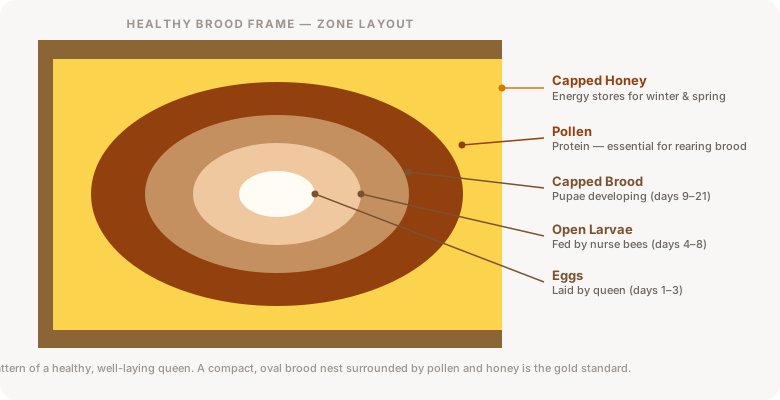
Reading from the center out:
- Eggs — The innermost zone. Tiny, white, upright in cells. If you can see these, your queen was active within the last 72 hours.
- Open larvae — Surrounding the eggs. Glistening, C-shaped white grubs in various stages. Nurse bees should be visible tending them.
- Capped brood — The largest zone. Tan, slightly domed cappings. This is where pupae are developing.
- Pollen — A ring of packed pollen cells surrounding the brood nest. Colors range from pale yellow to deep orange depending on the source plants.
- Capped honey — Outer edges and corners. White wax cappings, often in the top corners and on outermost frames.
This layout isn't arbitrary — it's thermal management. The brood needs the warmest part of the hive (the center), while honey and pollen store well at the cooler edges.
Reading Brood Quality
The brood zone tells you the most about your queen's health and performance. Here's what to look for:
Compact vs. Scattered Pattern
Hold the frame at arm's length and look at the capped brood area as a whole. A healthy queen produces a compact, solid pattern — the capped cells cover most of the central area with few gaps. Think of it as a dense oval or egg shape.
A scattered or "shotgun" pattern — many empty cells interspersed throughout the brood area — is a warning sign. Some causes are benign (backfilling with honey during a nectar flow, hygienic behavior removing diseased larvae), but a consistently scattered pattern over multiple inspections usually indicates:
- A failing or poorly-mated queen
- Disease (sacbrood, EFB, AFB)
- Chilled brood from a population crash or cold snap
If you see scattered brood, note it and check again in 7–10 days before acting. A single scattered frame in an otherwise healthy hive is usually not alarming. Multiple frames with scattered brood across two consecutive inspections is.
Capping Appearance
Healthy capped brood cappings are:
- Tan to golden brown in color
- Slightly domed — convex, not sunken
- Intact — no holes, no discoloration
Sunken, dark, or punctured cappings need immediate investigation. This is the primary visual sign of American Foulbrood. Use a toothpick: insert it into a suspicious cell and pull slowly. If it ropes out in a stringy, elastic thread (like melted cheese), treat as a suspected AFB case and contact your state apiarist before moving any equipment.
Larval Appearance
Healthy open larvae are pearlescent white and slightly glistening from the royal jelly surrounding them. They should look plump and tightly coiled (young larvae) to stretched and filling the cell (older larvae).
Concerning signs:
- Yellow or brown coloration — may indicate European Foulbrood (EFB) or sacbrood
- Twisted or sunken larvae — EFB larvae often look melted or off-position in the cell
- Dry or chalky appearance — chalkbrood, a fungal disease that mummifies larvae into hard white or gray pellets
Finding Eggs
Eggs are the most valuable thing you can find on a frame inspection — they confirm the queen was present within 72 hours. But they're also the hardest to see.
How to see eggs:
- Position the frame so sunlight (or your headlamp) illuminates the cell bottoms at a low, raking angle
- Look into the cells — don't try to see them from above. Tilt the top of the frame slightly toward you.
- Dark, aged comb makes eggs much easier to spot than new, bright wax
- Bifocals or reading glasses help if you struggle with close focus
An egg looks like a tiny grain of rice standing upright at the bottom of a cell. Young larvae are curled, transparent grubs. The transition from egg to visible larva happens around day 4.
If you can't find eggs but you find young larvae, your queen was present within the last week. That's usually sufficient confidence that the colony is queen-right.
Reading the Pollen Zone
The pollen ring surrounding the brood nest is a colony health indicator that most new beekeepers overlook. A well-provisioned pollen ring (1–2 frames of solid pollen storage) means nurse bees have what they need to rear healthy brood.
A colony that lacks pollen — especially in early spring or during a summer dearth — will reduce brood rearing and produce smaller, less healthy adult bees. If you see brood frames with little to no pollen in the surrounding cells, consider supplemental protein feeding.
Pollen comes in many colors depending on the source: bright orange (dandelion, marigold), pale yellow (clover), red (maple, tulip poplar), gray-green (eucalyptus). Multiple colors on a single frame indicate good forage diversity — a positive sign.
Reading the Honey Zone
The honey zone in the outer corners and edges of brood frames is distinct from pure honey storage frames. This "frame honey" is the colony's immediate food reserve — what nurse bees and larvae draw from day to day.
In a well-nourished colony, you should always see some capped honey in the upper corners of brood frames, even at the peak of summer brood rearing. Completely empty honey frames in the brood nest are a starvation warning, especially in spring or fall.
What capped honey looks like vs. capped brood:
- Honey cappings: Lighter, drier, often slightly concave or flat. Tend to appear in corners and edges.
- Brood cappings: Tan, slightly domed, warmer in color, in the center of the frame.
Key Takeaways
- Read frames center-to-edge: eggs → larvae → capped brood → pollen → honey. Each zone tells you something different.
- A compact, oval-shaped brood pattern indicates a healthy, productive queen. Scattered brood across multiple frames over multiple inspections needs investigation.
- Eggs confirm the queen's presence within 72 hours. Learn to find them — use raking light and look into the cells, not across them.
- Pollen reserves around the brood nest matter as much as honey. A thin pollen ring means reduced brood quality.
- Healthy cappings are tan and slightly domed. Sunken, dark, or punctured cappings require immediate investigation with the toothpick test.
Next in the Beginner Course
What a Healthy Colony Looks Like: Benchmarks for Every Season
Continue reading
Reading Your Inspection History: Trends, Patterns, and Predictions
A single inspection tells you what's happening now. A series of inspections tells you where you're headed. Here's how to interpret trends in brood, population, and Varroa data to stay ahead of problems.
Using HiveHelper to Record and Track Your Inspections
The value of an inspection multiplies when you can compare it to your last five. HiveHelper's inspection log keeps your records organized, searchable, and synced across devices — here's how to use it effectively.
What a Healthy Colony Looks Like: Benchmarks for Every Season
You can't spot problems without a clear mental model of normal. These are the benchmarks — population, brood pattern, stores, and queen signs — that define a colony in good health.